
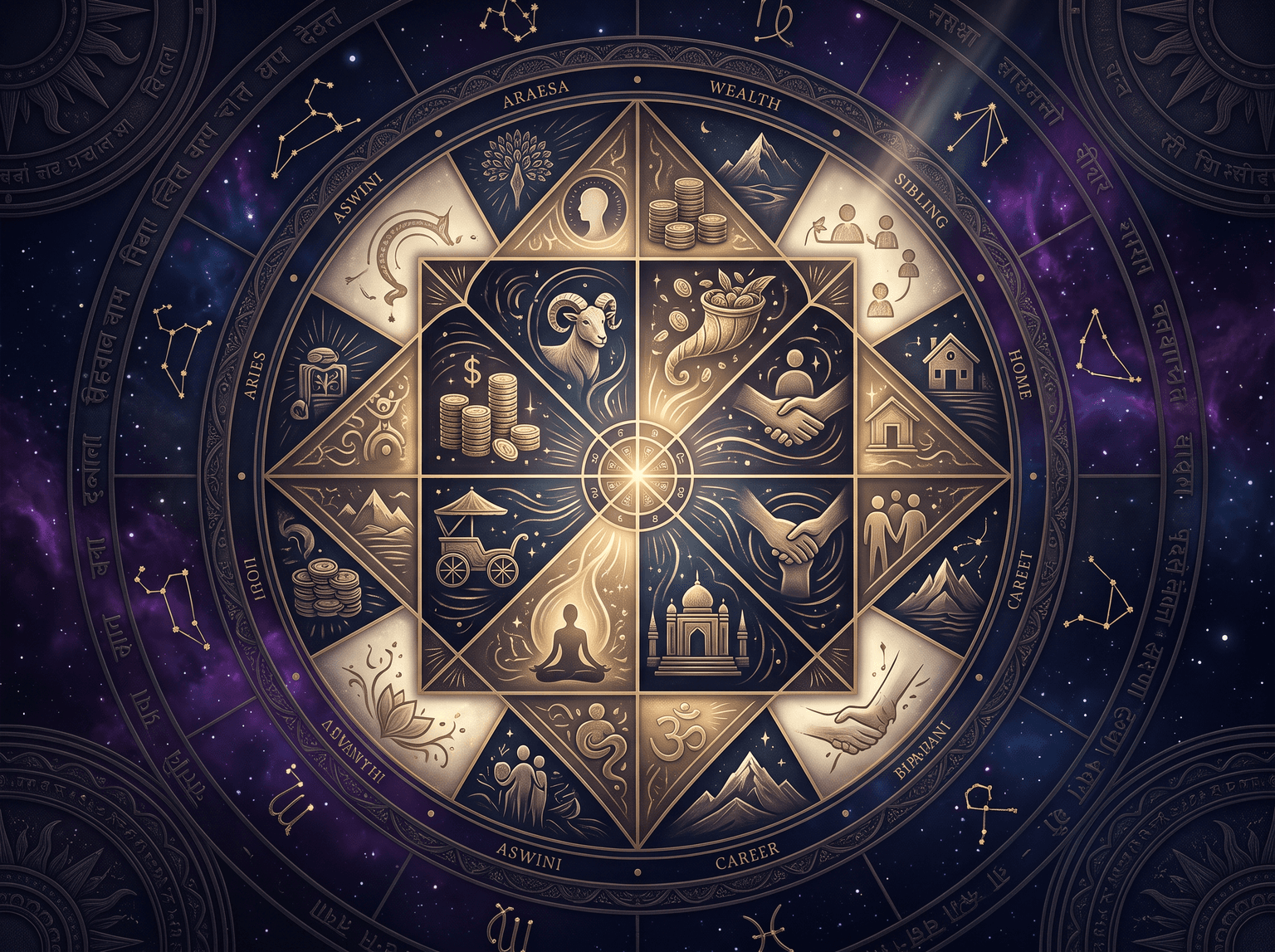
Every birth chart in Vedic astrology, or Kundli, is divided into twelve houses, known as Bhavas. Each house governs specific areas of life, from personality and wealth to relationships and career. Understanding these houses is the foundation for reading any chart accurately.
Houses 1 to 4: Self, Wealth, Siblings and Home
The 1st house, or Lagna, represents the self, physical body, and overall personality, and sets the tone for the entire chart.
The 2nd house governs wealth, family, and speech, the 3rd house relates to courage, siblings, and communication, and the 4th house covers home, mother, and emotional foundation.
Houses 5 to 8: Creativity, Health, Partnerships and Transformation
The 5th house is tied to creativity, children, education, and intelligence, while the 6th house governs health, debts, enemies, and daily routines.
The 7th house represents marriage and business partnerships, and the 8th house relates to transformation, longevity, and hidden matters.
Essential Key Insight
“A beginner-friendly breakdown of what each Bhava governs in your birth chart.”
Houses 9 to 12: Fortune, Career, Gains and Liberation
The 9th house is the house of fortune, higher learning, and dharma, often called the most auspicious house in the chart.
The 10th house governs career and public reputation, the 11th house relates to income and gains, and the 12th house covers expenses, foreign connections, and spiritual liberation.
Why House Analysis Matters
No planet or sign is read in isolation; its effect is always interpreted through the house it occupies and the house it rules.
This is why two people with the same Sun sign can have very different life experiences, since the placement of planets across the twelve houses varies significantly between charts.
Final Thoughts
Learning the twelve houses is the first real step toward reading a birth chart with confidence. Once these foundations are clear, planetary placements and dashas begin to make far more sense.