Retrograde, or Vakri, planets often cause worry when spotted in a birth chart, largely due to popular Western astrology narratives. In Vedic astrology, however, retrograde motion carries a more nuanced meaning that is frequently misunderstood.
What Does Retrograde Mean?
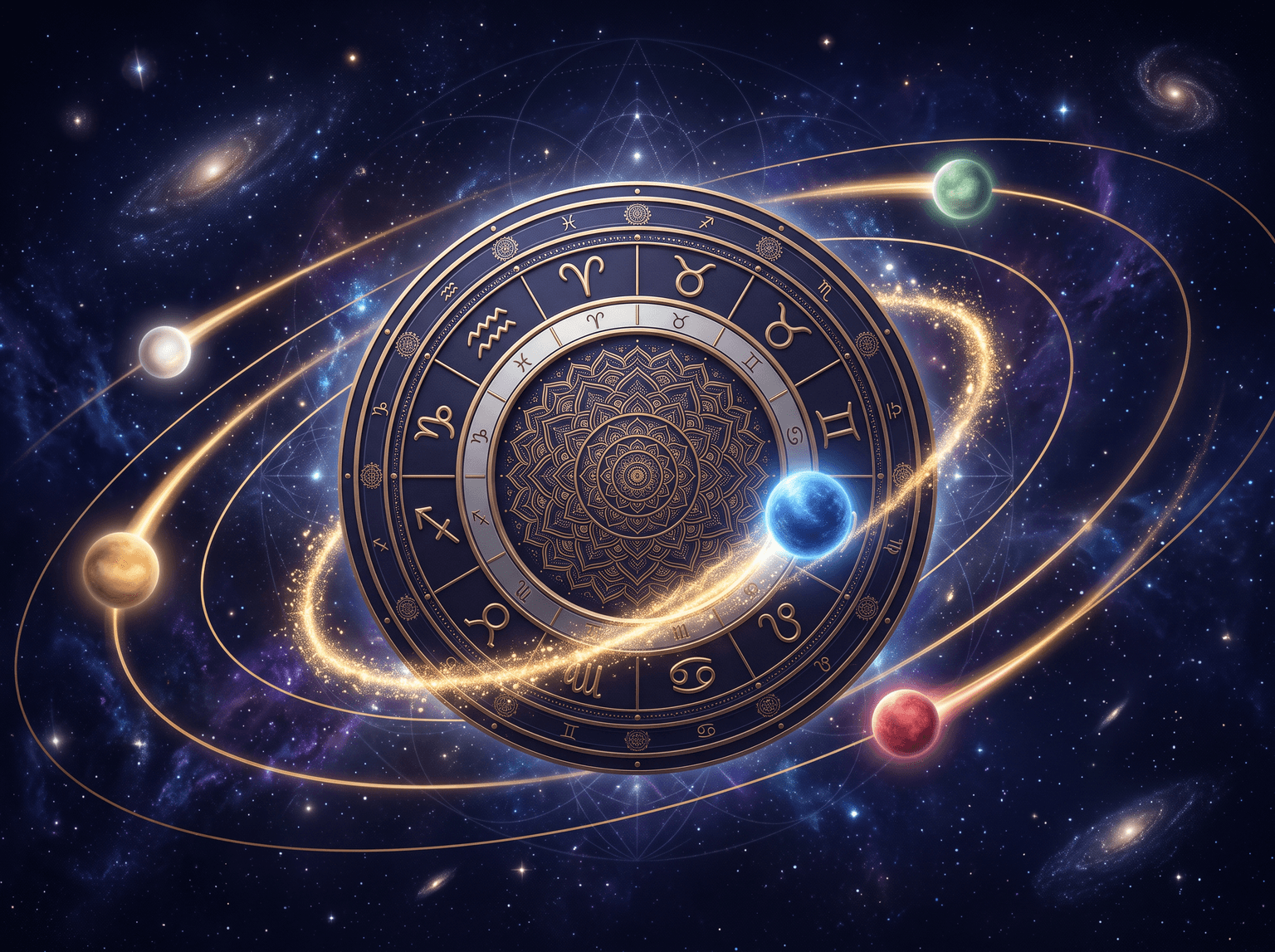
Retrograde motion is an optical effect where a planet appears to move backward through the zodiac as seen from Earth, even though it continues moving forward in its actual orbit.
Only the five visible planets, Mercury, Venus, Mars, Jupiter, and Saturn, can appear retrograde; the Sun, Moon, Rahu, and Ketu never do in traditional calculation.
How Vedic Astrology Views Retrograde Planets
Many classical texts consider a retrograde planet to function with increased strength, often described as behaving similarly to being in its own sign or exalted position.
This is a notably different perspective from popular narratives that treat retrograde as purely disruptive.
Essential Key Insight
“What it actually means when a planet turns Vakri, and why it isn't automatically a bad sign.”
Common Themes of a Retrograde Planet
A retrograde planet often indicates unfinished business or intensified focus related to the significations of that planet, sometimes tied to past patterns that need resolution.
For example, retrograde Saturn can bring a strong need to rework structures and responsibilities, while retrograde Venus may intensify themes around relationships and personal values.
Reading Retrograde Planets in Context
As with any placement, the house, sign, and aspects involved matter far more than the retrograde status alone.
A skilled astrologer evaluates the planet's overall strength, its dignity, and its role as a house lord before drawing any conclusions about its effects.
Final Thoughts
Retrograde planets are neither inherently good nor bad; they simply function differently, often bringing intensity, introspection, and unfinished themes to the surface. Understanding this nuance replaces fear with useful insight.