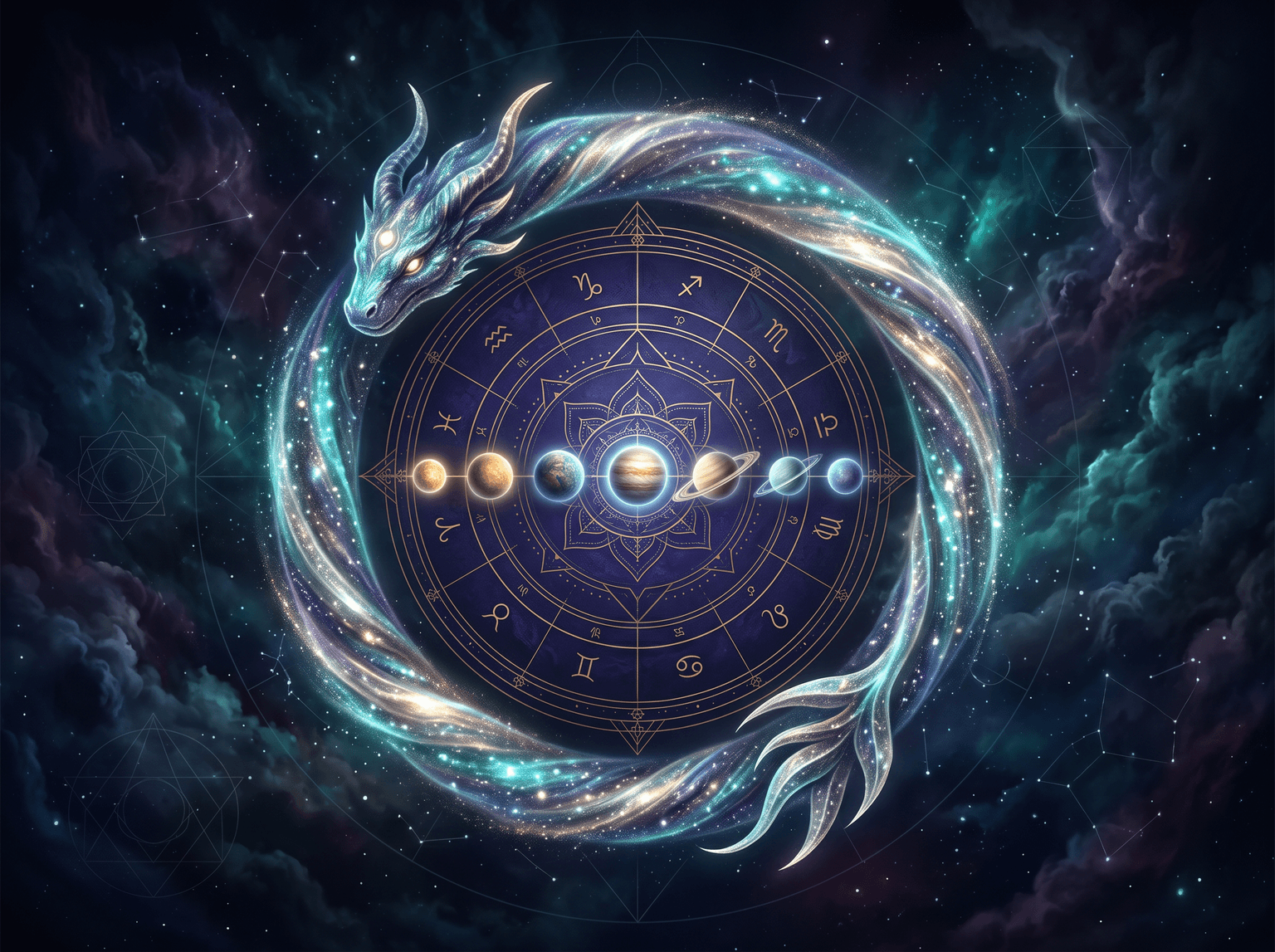
Kaal Sarp Dosha is one of the more feared combinations in Vedic astrology, yet it is also one of the most misrepresented. Understanding its actual astrological basis helps separate genuine guidance from unnecessary alarm.
What is Kaal Sarp Dosha?
This dosha forms when all seven classical planets are hemmed between Rahu and Ketu on one side of the chart, with no planet positioned outside this axis.
There are twelve recognized types of Kaal Sarp Dosha, each named according to the house Rahu occupies, and each carries a slightly different flavor of effects.
Commonly Attributed Effects
Traditional texts associate this dosha with delays, obstacles, anxiety, and a sense of struggle that persists despite consistent effort, particularly in the early part of life.
It is also frequently linked to vivid dreams, restlessness, or a feeling of being pulled between conflicting desires.
Essential Key Insight
“What it really means when all planets sit between Rahu and Ketu, and how to work with it constructively.”
Why Context Matters More Than Fear
The strength of this dosha depends heavily on the overall chart, the specific type present, and the condition of Rahu and Ketu themselves.
Many highly accomplished individuals have this combination in their charts, which suggests that the dosha often manifests as delayed but eventual success rather than permanent misfortune.
Traditional Remedies
Common remedies include performing Kaal Sarp Dosha puja at recognized temples, chanting the Maha Mrityunjaya mantra, and offering prayers to Lord Shiva, who is associated with controlling serpent energy.
Practical remedies such as patience, avoiding impulsive major decisions, and consistent long-term planning are equally emphasized by experienced astrologers.
Final Thoughts
Kaal Sarp Dosha is best understood as a call for patience and persistence rather than a sign of inevitable hardship. With the right guidance, its challenges often become a path toward significant, well-earned growth.